Global Insights In Depth
Power belongs to those who read between the lines, not just the headlines.
Global Insights In Depth
Power belongs to those who read between the lines, not just the headlines.


De-dollarization is reshaping global finance in quiet but profound ways. De-dollarization refers to efforts by countries to reduce reliance on the US dollar in international trade and finance. The US dollar retains enormous clout, but the combination of coordinated BRICS+ initiatives, central bank digital currencies (CBDCs) and AI first settlement platforms is creating a parallel operating system for trade. This is not an overnight collapse of the dollar it is a structural evolution. For investors, central bankers and policymakers, the question is no longer whether the dollar will change, but how fast the plumbing that supports it will be rewritten.
The shift isn’t sudden. It’s structural. And powered by both geopolitics and technology.
The dollar’s post World War II dominance came from deep liquidity, trusted institutions and the petrodollar era. That system advantaged US capital markets, made dollar debt the safe asset of choice, and tied energy markets to Washington’s financial architecture. But two trends eroded that stability: the weaponization of financial plumbing through sweeping sanctions, and the rapid emergence of digital and AI systems that lower the transaction costs of cross border trade.
Sanctions in the 2010s and early 2020s (on Russia, Iran and others) exposed the leverage that a single currency gives its sovereign issuer. Many countries began to hedge that exposure by diversifying reserves and exploring alternative payment rails. Over time this hedge has evolved from theory into operational infrastructure.
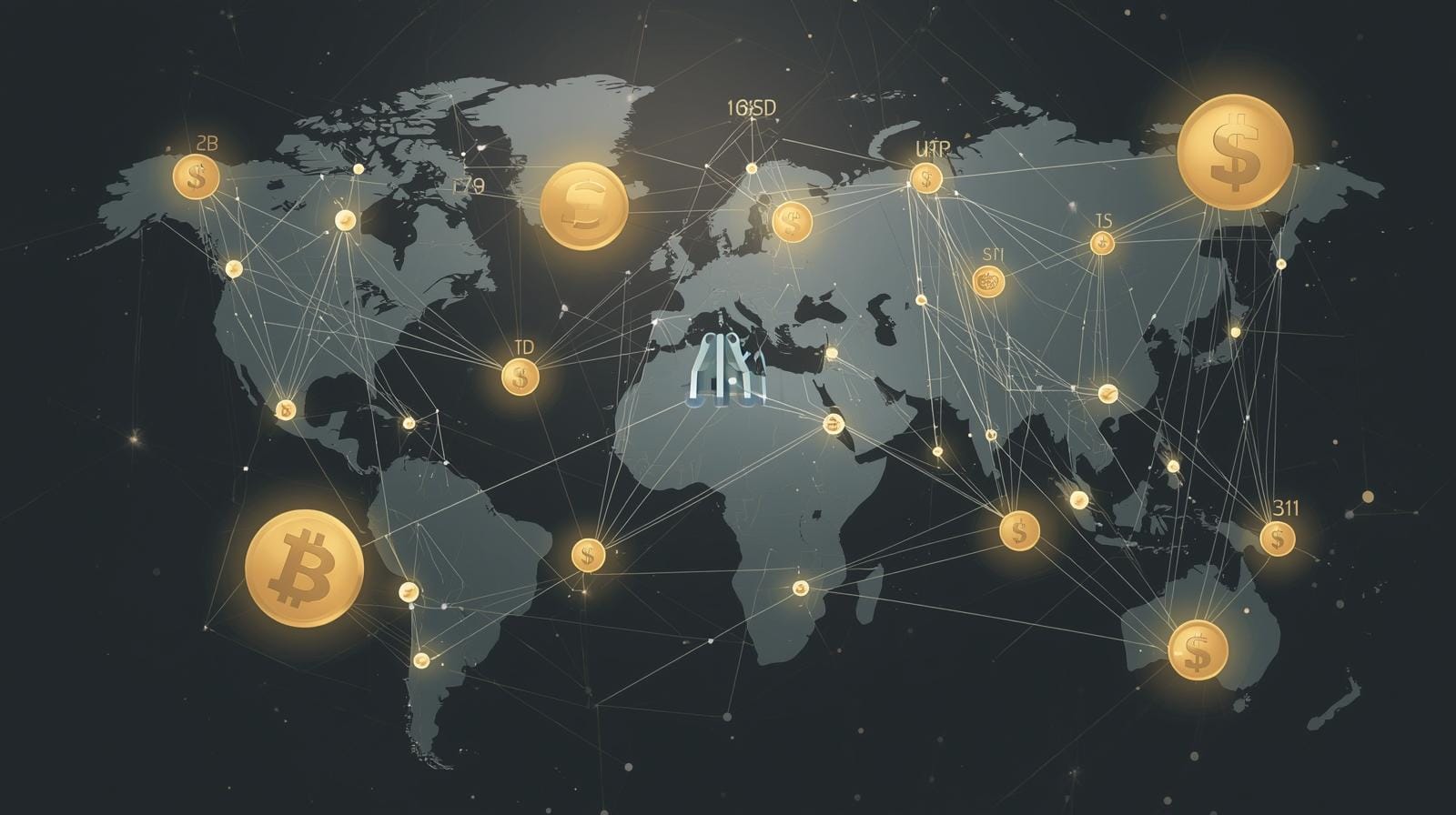
2025 saw real coordination. BRICS+ members have accelerated pilots and talks of cross-border settlement systems – permissioned rails and pilot platforms aimed at settling some energy and commodity trades in local or digital currencies – though a single, fully operational BRICS-wide clearing system is not yet in production and remains in the pilot/coordination stage. Reports describe new guarantee funds and pilot projects among BRICS members in 2025.
Previous attempts to diversify away from the dollar foundered on liquidity and clearing. AI-powered matching engines, tokenized collateral and smart contract credit rails now make high-frequency cross-currency settlement feasible without a single reserve currency as intermediary. In short: the technology gap that once favored the dollar has narrowed.
AI plays three roles in the new architecture:
Several central banks and private consortia have run pilots combining CBDC or tokenized settlement layers with automated compliance and pricing engines; reporters describe trial use-cases (including some Gulf-region experiments) but these remain experimental rather than widely deployed.
Important constraints slow the pace of de-dollarization:
De-dollarization has immediate geopolitical consequences:
Emerging economies gain negotiating leverage but face new risks. Local currency settlement reduces FX mismatch in trade but raises exposure to the policy choices of the currency issuer (for example, monetary or capital controls). AI platforms that optimize settlement can concentrate systemic risk if not properly regulated.
For investors and institutions, the near term environment suggests a mixed strategy:
Washington has three realistic responses: contain (sanctions), adapt (upgrade U.S. financial plumbing), or compete (offer an alternative tokenized liquidity). The most durable option is a hybrid – a modernized dollar system that embeds AI settlement compatibility and transparent, high-speed rails for allied liquidity.

De-dollarization is a recalibration rather than a collapse. The dollar’s role will erode in specific corridors as AI and CBDCs make alternatives practical; yet liquidity, trust and regulatory depth keep the dollar central in many markets. The real impact will be political: countries that build resilient, AI-driven financial infrastructure will win influence, and the next decade of global power will be decided as much by code and protocols as by traditional diplomacy.
“De-dollarization” is the process of countries reducing their use of the US dollar for trade, reserves, and finance. In 2026 it matters because major economies (like those in BRICS+) are actively seeking alternatives to the dollar system – using local currencies, gold, or digital currencies for trade. This could gradually weaken the dollar’s global influence and change how international trade is conducted.
BRICS+ nations (Brazil, Russia, India, China, South Africa, and partners) are launching initiatives to trade in their own currencies or new digital payment systems. For example, in 2025 they discussed a joint financial infrastructure and some began settling oil or commodity trades in yuan, rubles, or central bank digital currencies (CBDCs) instead of USD. They also set up funds (like the New Development Bank) to finance projects without using dollars.
Yes, indirectly. AI is making it easier to operate alternative financial networks. In 2026, AI algorithms help with real-time currency exchange, risk management, and compliance in non-dollar trade systems. This technological boost means countries can more feasibly use digital currencies or barter systems, because AI can efficiently handle the complex transactions and monitoring that used to require the dollar’s stable infrastructure.
No, it’s a gradual shift, not an overnight collapse. The dollar is still dominant and considered very stable. De-dollarization efforts are incremental: even by 2026, they affect a portion of global trade, not all of it. The US dollar still has deep trust, huge financial markets, and broad use. This trend means the dollar’s share might slowly decline over years, but it’s more of an evolution of the system rather than a sudden end of dollar dominance (as the article concludes, it’s a “recalibration rather than a collapse”)
Related reads on TrendDepth: