Global Insights In Depth
Power belongs to those who read between the lines, not just the headlines.
Global Insights In Depth
Power belongs to those who read between the lines, not just the headlines.

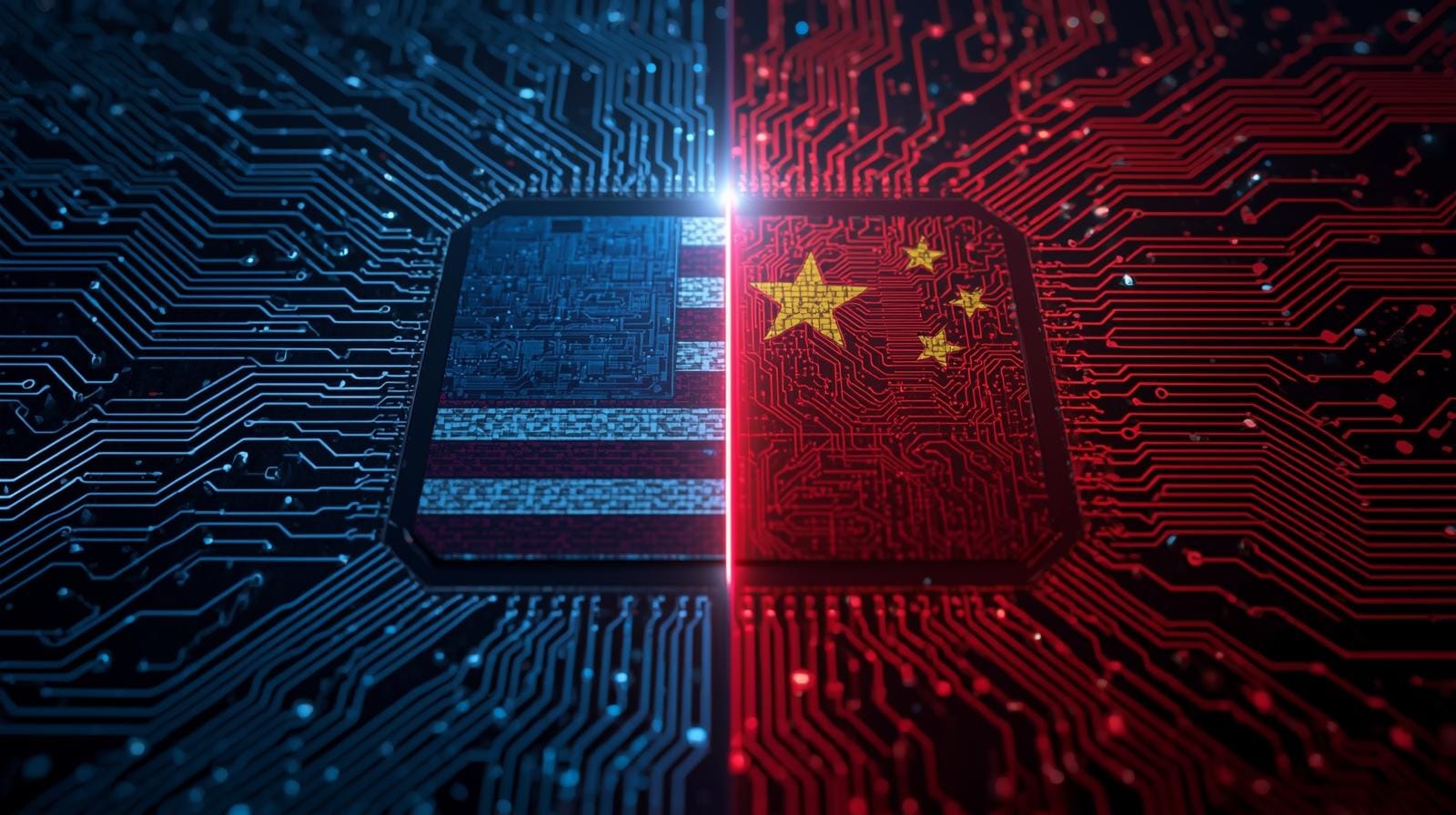
The U.S.-China tech rivalry is much more than a headline about AI chip sanctions/export controls it’s a high-stakes competition over who will set the rules for the digital age. At its core, this struggle is about control: control over AI sovereignty, over the infrastructure that powers the global economy, and over the future of innovation itself. The days are gone when tech race was about smartphones or 5G networks. Today, the frontlines are drawn around artificial intelligence chips, advanced semiconductors, and the digital highways connecting our world. This is not just a diplomatic chess match; it’s a contest that will shape markets, national security, and the very balance of global power. For those in business, investing, or policymaking, grasping the dynamics of this tech war is no longer optional it’s essential for anyone who wants a stake in the next industrial revolution.
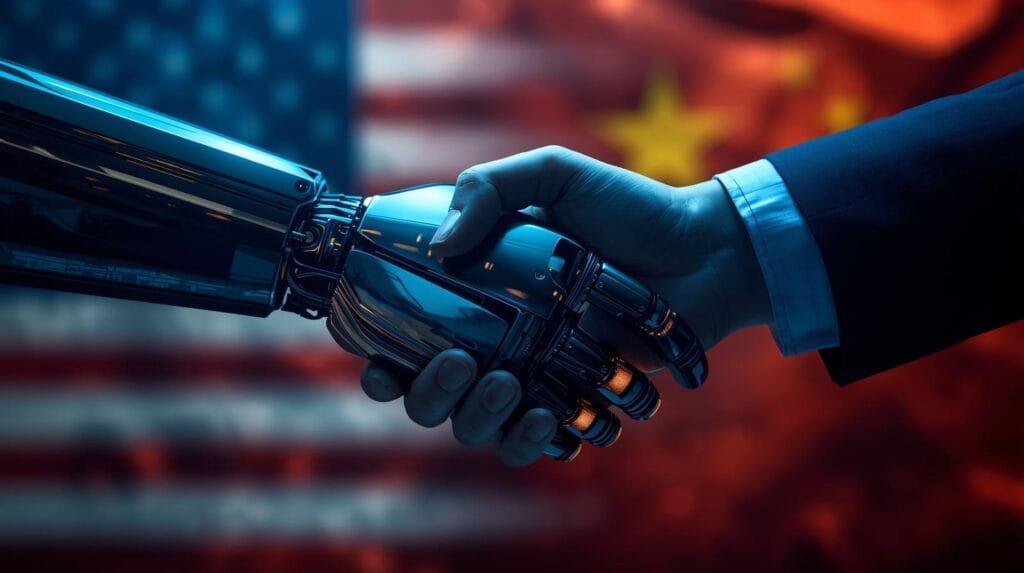
For decades, the United States dominated the global technology sector. Silicon Valley companies such as Intel, NVIDIA, Qualcomm, and Microsoft shaped innovation. But China’s rise in the 2000s disrupted this balance. Massive state funding, aggressive industrial policies, and companies like Huawei, SMIC, and Alibaba turned Beijing into a tech powerhouse.
The tension escalated when the US accused Chinese firms of intellectual property theft, cyber espionage, and unfair trade practices. Washington’s response was sanctions, export bans, and restrictions on sensitive technologies.
By 2023, the rivalry had evolved into a full-scale tech war. In 2025, the sharpest flash point is AI chips – the processors that power artificial intelligence systems, self-driving cars, and future defence technologies.
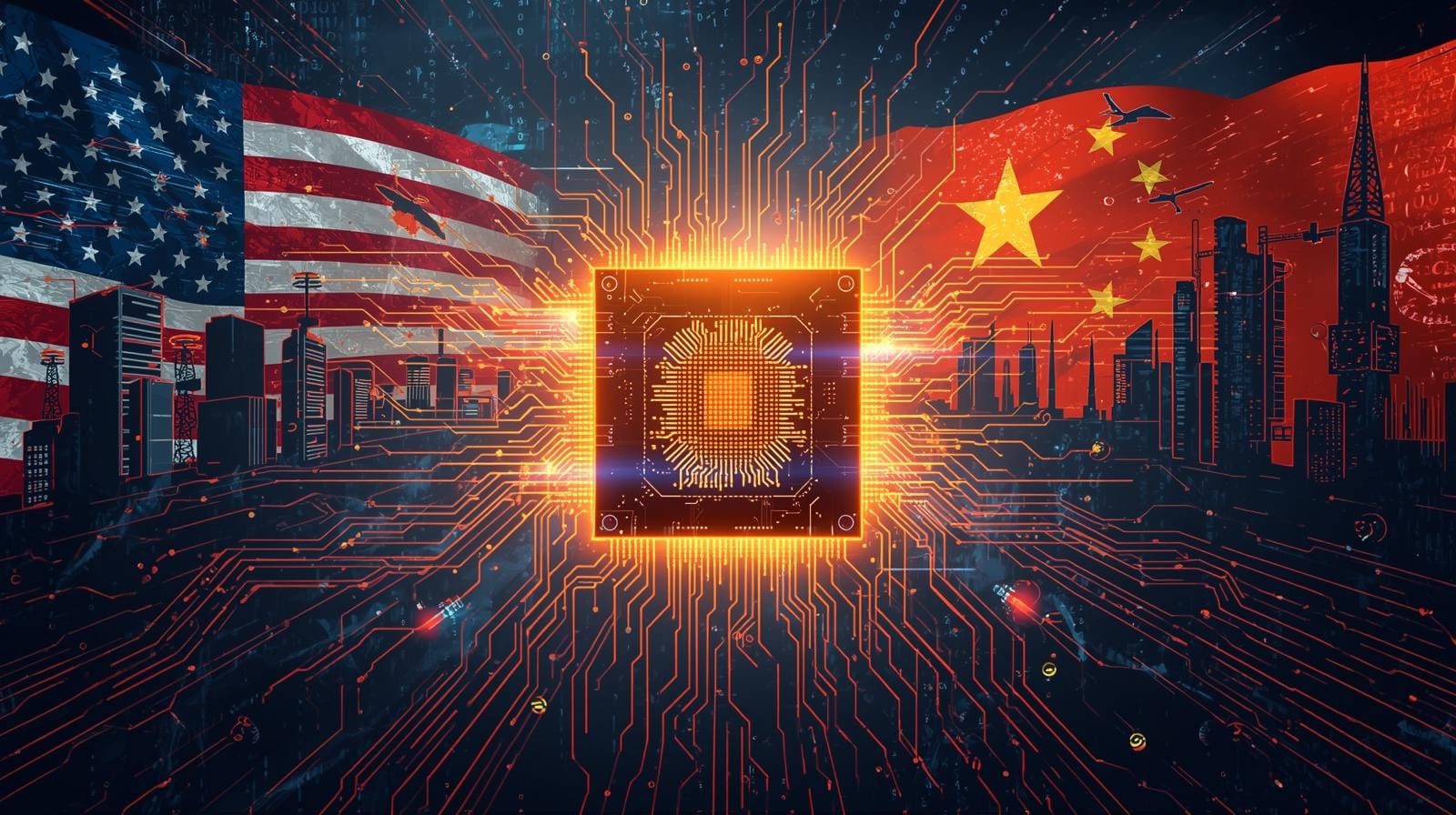
By 2025, semiconductors have become the tool of global power, and AI chips sit at the heart of the struggle. The U.S.-China tech rivalry is no longer about trade disputes or tariffs it’s about who controls the computing power behind artificial intelligence, defense, and future industries. The year has already seen a dramatic series of moves from Washington, exposing just how volatile this front has become.
Before leaving office, the Biden administration attempted to lock in a structured framework for chip exports. His team introduced what analysts now call the AI Diffusion Rule a set of performance thresholds that created a “green zone” for lower tier chips and a “red zone” for the frontier class processors. Nvidia’s H20, for instance, was allowed, but the flagship H100 or AMD’s MI300X were firmly off the table. The intent was clear: keep China out of the race for cutting edge military AI, while maintaining a trickle of commercial trade.
In April 2025, after taking office, Donald Trump swiftly ended the more nuanced Biden approach. His administration halted all “green zone” chip exports to China. Overnight, U.S. companies like Nvidia and AMD lost access to a major market, causing investor concerns about a full scale decoupling. The White House explained the move as a national security measure, prioritizing long term strategic interests over short-term economic gains.
By August 2025, reports and policy leaks suggested a compromise was on the table. Mid range AI chips, such as Nvidia’s H20 and AMD’s MI308, could once again be exported to China but under strict revenue sharing conditions. U.S. firms would be required to contribute 15% of their China sales revenue to the Department of Commerce in exchange for export licenses.
This arrangement turned AI chip exports into a mechanism of statecraft: not just regulatory control, but a financial lever linking corporate profits to Washington’s strategic objectives. For Nvidia and AMD, the deal provided a pathway back into China, albeit with thinner margins. For Beijing, it was both a setback and a signal: access to American technology now carries political and financial costs.
If the 20th century was defined by who controlled oil reserves, the 21st is being defined by who controls semiconductors. The latest US sanctions and Trump’s revenue sharing deal show how AI chips have become both the battlefield and the bargaining chip of global politics. The frontline is not just in Silicon Valley or Shenzhen it runs through Washington’s policy offices, Beijing’s industrial ministries, and the stock exchanges of New York, Shanghai, and Taipei.
Beyond military implications, these sanctions have reshaped global investment flows. Venture capital once flowing freely into Chinese AI startups has slowed, as investors fear restrictions on chip availability.
Meanwhile, U.S. allies such as Japan and South Korea are benefiting from increased Western demand for non Chinese AI hardware. This sanctions first approach signals that the U.S. sees chips not as trade goods, but as the strategic oil of the 21st century.
Beijing has not stayed silent. In response to sanctions, China has:
The message from Beijing is clear: China does not want to remain dependent on US-controlled technologies.
Beyond hardware, Beijing is pouring resources into building its own AI foundation models trained exclusively on domestic data. This “AI sovereignty” approach ensures that even if China lags in cutting edge chips, it can still shape the algorithms that power finance, surveillance, and defense. In practice, this means more closed ecosystems, government driven research, and partnerships with universities that align with China’s long term digital governance model.
The semiconductor industry is deeply interconnected. Taiwan, South Korea, Japan, the US, and the Netherlands (ASML’s lithography machines) all play critical roles. Any disruption in the U.S.-China tech ecosystem shakes the entire global supply chain.
For global investors, this uncertainty means both risks and opportunities. Semiconductor stocks, rare earth minerals, and AI-related sectors are now directly linked to geopolitics.
By 2025, semiconductors are no longer just an industry but they are a pillar of national security. Countries from India to the EU are rolling out “chip sovereignty” acts, mirroring the U.S. CHIPS Act, to reduce single point dependencies. Supply chain resilience now means stockpiling chips like energy reserves, diversifying lithography suppliers, and forging cross-border alliances. For investors, the question is no longer if governments will intervene, but how far they will go in subsidizing their own tech ecosystems.
While sanctions create turbulence, they also redirect capital. Hedge funds are eyeing Taiwanese subcontractors and Dutch lithography suppliers as safe havens. Indian and Vietnamese equities linked to chip assembly are seeing valuation spikes. Meanwhile, Chinese tech firms are turning to state backed venture pools, creating a dual track capital market: open markets for U.S. aligned firms, and closed, state driven financing for China. This fragmentation could reshape global financial flows as dramatically as the 1970s oil shocks reshaped energy markets.
One of the biggest questions of 2025 is whether the world will move toward two separate tech ecosystems:
If this “digital iron curtain” becomes reality, it would reshape not only technology but also finance, defense, trade, and even culture.
If tech ecosystems fracture completely, we may see a “digital Cold War” where standards, platforms, and even internet protocols diverge. For example, U.S. led systems could dominate aerospace, defense, and financial AI, while China led systems could control e-commerce, digital payments, and surveillance networks in the Global South. This is not just about market share it is about which values (openness vs. control) underpin the digital economy.
For example, China is pushing its own RISC-V standards as an alternative to ARM, while the U.S. is doubling down on export controls around EDA software (Cadence, Synopsys). In telecoms, Beijing is embedding BeiDou satellite positioning into AI platforms, while the U.S. leans on GPS linked AI ecosystems.
These technical standards battles may sound niche, but they matter: whoever sets the standards controls the ecosystem.
The U.S.-China tech war is not slowing down. In fact, it is accelerating. The competition for AI supremacy, semiconductor control, and digital influence will likely define the next decade.
For professionals and investors, the key is to stay informed, adapt strategies, and look beyond borders. The companies and nations that master AI + chips will not only dominate the global economy but also set the rules of international power.
Three flash points will shape the next phase of the tech war:
For professionals and investors, this is more than headlines and it is a call to anticipate shifts before they become shocks.
History shows that every industrial revolution created new winners and losers. The current AI chip race is no different. Whether the US retains its edge or China succeeds in breaking free, the world is entering a new era – one where technology is the ultimate weapon of power.
It refers to the strategic competition between the U.S. and China over technology leadership. In 2025, it centers on control of advanced AI chips, software, and tech infrastructure. Both nations are vying to set global tech standards, protect national security, and dominate the digital economy.
Advanced semiconductors power AI systems, defense tech, and future industries. In 2025, AI chips became a focal point because whoever leads in AI hardware gains an edge in military and economic power. U.S. export bans on high-end chips aim to slow China’s progress, while China is racing to develop its own chips.
The U.S. imposed strict controls on AI chip exports – initially nuanced rules under Biden, then a broader ban in 2025 under Trump. These sanctions limit China’s access to top-tier NVIDIA/AMD chips, pushing China to invest heavily in domestic chip R&D. In the short term, Chinese firms face hardware shortages; long-term, it accelerates China’s self-sufficiency efforts.
Related reads on TrendDepth: